

Two Things About Longgong - Ctrip. Traveler's Guide to Longgong Tour
Release Date: 2016-10-29
Views: 2023
【Font Size: Large Medium Small】
I am a native or an unnative person from Anshun. Since I was just a month old, my family moved to Chuxiong, Yunnan Province due to my parents' work. We lived there until the third of March when we were forced to return to Anshun, Guizhou Province due to our household registration issues. My parents had a deeper understanding of this reason, which was difficult for a teenager at that time to accept - fallen leaves must return to their roots, and wanderers need to return home.
This strange yet familiar city, at that time for me, was something to be detested and rejected. But now, for me, it is something lovely and gentlemanly.
In order to explore the tourism resources of Guizhou Province, promote the beautiful scenery of Longgong Scenic Area, and enrich the travel experiences of college students across the province, the China (Guizhou) University Media Alliance and Ctrip Travel Network jointly organized a visiting and exploring activity for college students from Guizhou universities to the Longgong Scenic Area.
When talking about the original intention of participating in this activity, it is closely related to one thing. When talking about this matter, one feels ashamed... During the vacation, I traveled to Xi'an. On the way, I happened to meet a girl from Inner Mongolia. When we talked about our respective hometowns, without exaggeration, she started from the Tang Dynasty's Turkestan and went on to talk about the establishment of the Inner Mongolia Autonomous Region, from Hulun Buir to Manzhouli. Naturally, I couldn't lag behind. I combined what I had read in books and what I heard from others with some personal imagination, trying to present it in an expressive and emotional way. However, I couldn't fill the lack of content. Later, I recalled that the reason for the gap was the lack of practice. Since such a rare opportunity was provided, to promote one's hometown and touch the land, I naturally participated without hesitation. The outcome was not disappointing. I think that the next time I meet that girl, I will talk about this experience to her. She will surely feel the same and will unhesitatingly fall in love with it.
This strange yet familiar city, to me at that time, was something to be detested and rejected. But now, it is something lovely and gentlemanly.
In order to explore the tourism resources of Guizhou Province, promote the beautiful scenery of Longgong Scenic Area, and enrich the travel experiences of college students across the province, the China (Guizhou) University Media Alliance and Ctrip Travel Network jointly organized a visiting and exploring activity for college students from Guizhou universities to the Longgong Scenic Area.
When talking about the original intention of participating in this activity, it is closely related to one thing. When talking about this matter, one feels ashamed... During the holiday, I traveled to Xi'an. On the way, I happened to meet a girl from Inner Mongolia. When we talked about our hometowns, without exaggeration, she started from the territory of the Tang Dynasty's Turks and went on to talk about the establishment of the Inner Mongolia Autonomous Region, from Hulun Buir to Manzhouli. Naturally, I couldn't lag behind. I added some personal imagination to what I saw in books and heard by word of mouth, trying to make it vivid and expressive. However, I couldn't fill the lack of content. Later, I recalled that the reason for the gap was the lack of practice. Since such a rare opportunity was provided, to promote one's hometown and touch the land, I naturally participated without hesitation. The outcome was not disappointing. I think that the next time I meet that girl, I will talk about this experience to her. She will surely feel the same and unhesitatingly fall in love with it. Longgong was officially opened to the public in 1984, was rated as a key scenic area in 1988, and was rated as one of the first batch of national AAAA-level tourist attractions in 2007. Describing it with words like "delightful to the taste", "masterpiece of nature", and "paradise on earth" is not an exaggeration at all.
Our tour guide, "Ximi Cao", is a young girl in her early twenties. Maybe in Longgong, she can encounter her "big potato". She is not tall, and it is completely impossible to spot her among the crowd. Fortunately, there is a flag marker, otherwise she would have lost her way on the way.
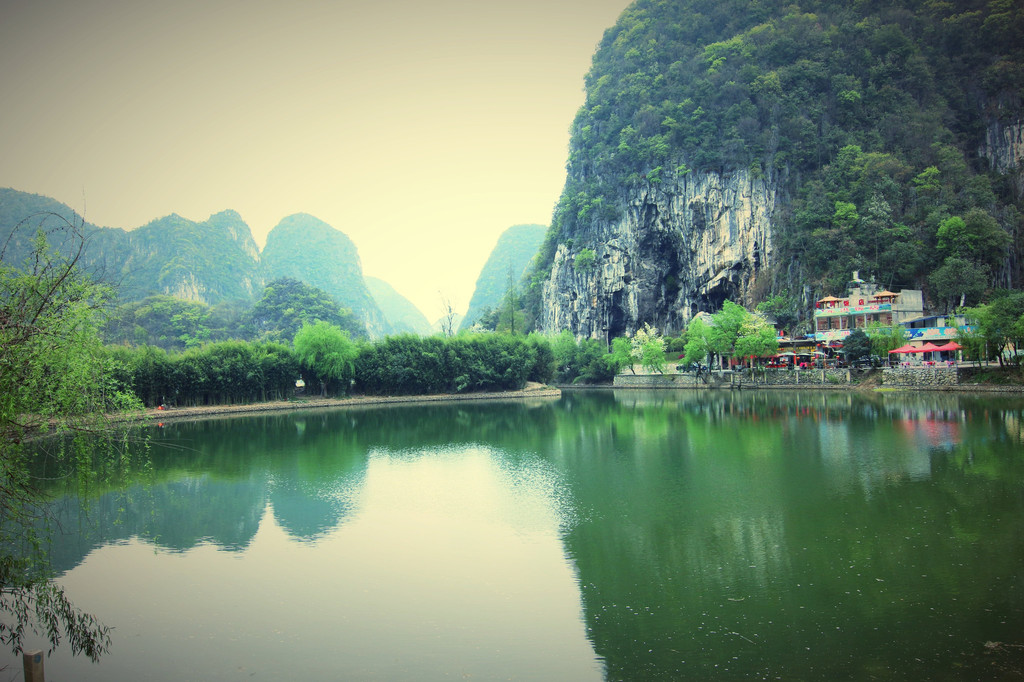
The scenic area is mainly composed of caves, grottoes and waterfalls, including four major areas: Longgong, Rapeseed Lake, Xuantang and Malaria Worm Cave. The central area of Longgong features attractions such as the Sleeping Dragon Lake, Welcome Cave, Dragon Gate Waterfall, Dragon Pool Heavenly Lake, Hidden Lake of Longgong, Shell Rock and Tiger Cave. These areas complement each other, creating a unique atmosphere.
Oh. "Mountains are not so important, but they gain fame with the presence of a deity. Water is not so deep, but it becomes magical with the presence of a dragon." The Dragon Palace is such a earthly paradise.
It took about three hours to travel there, and throughout the journey, my mind was constantly filled with amazement and wonder.
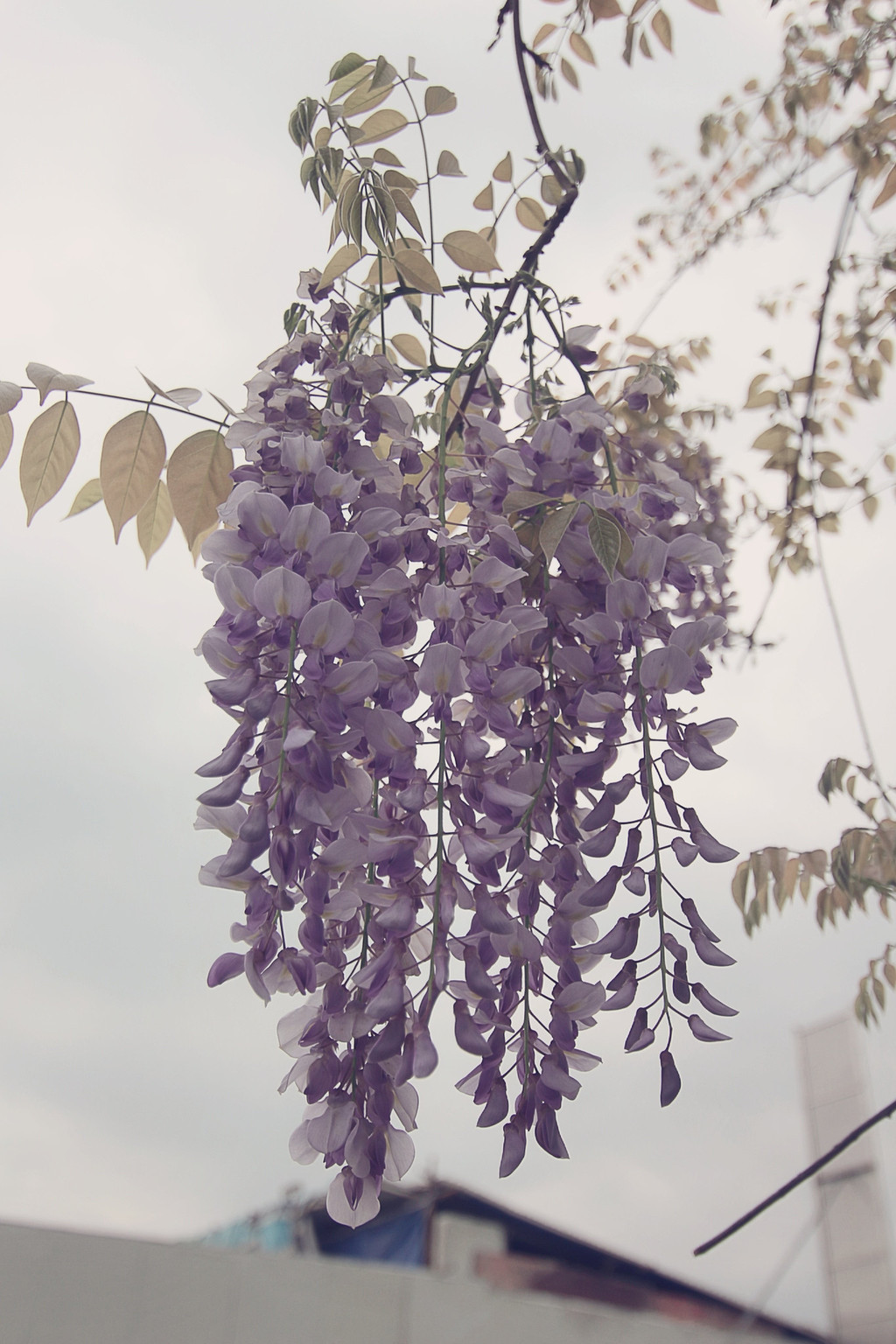
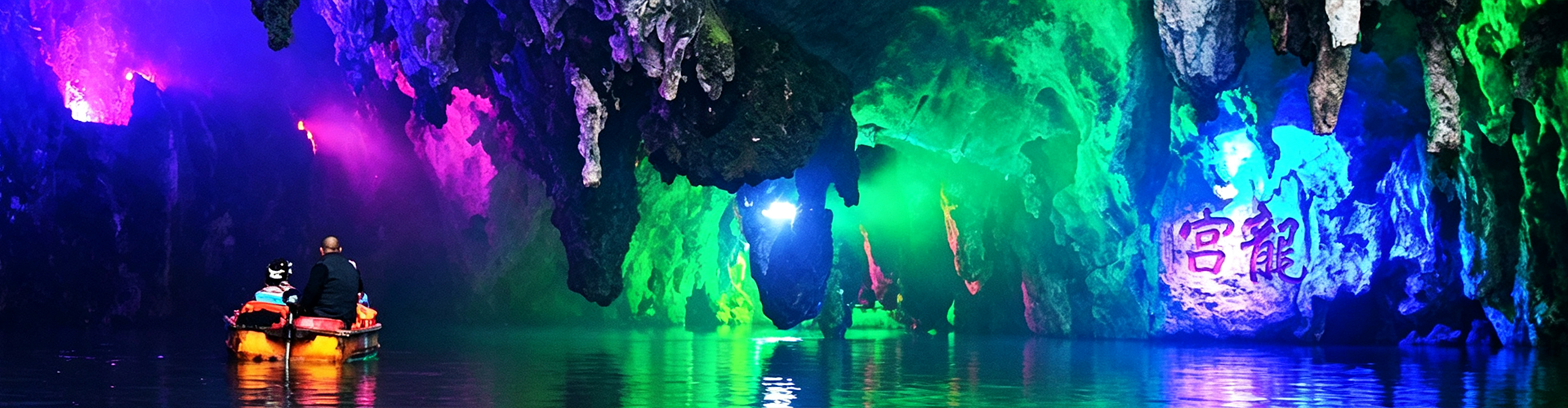
The underground river caves of "China's Beautiful Water-Saturated Caves" are the highlight of the tour. Traveling through the caves by boat, the gentle breeze caresses your face, and the stalactites inside the caves take on various shapes, presenting a mysterious and extraordinary scene. The accumulation of nature over thousands of years is like a magnificent and magnificent dragon king's sanctuary in a myth.
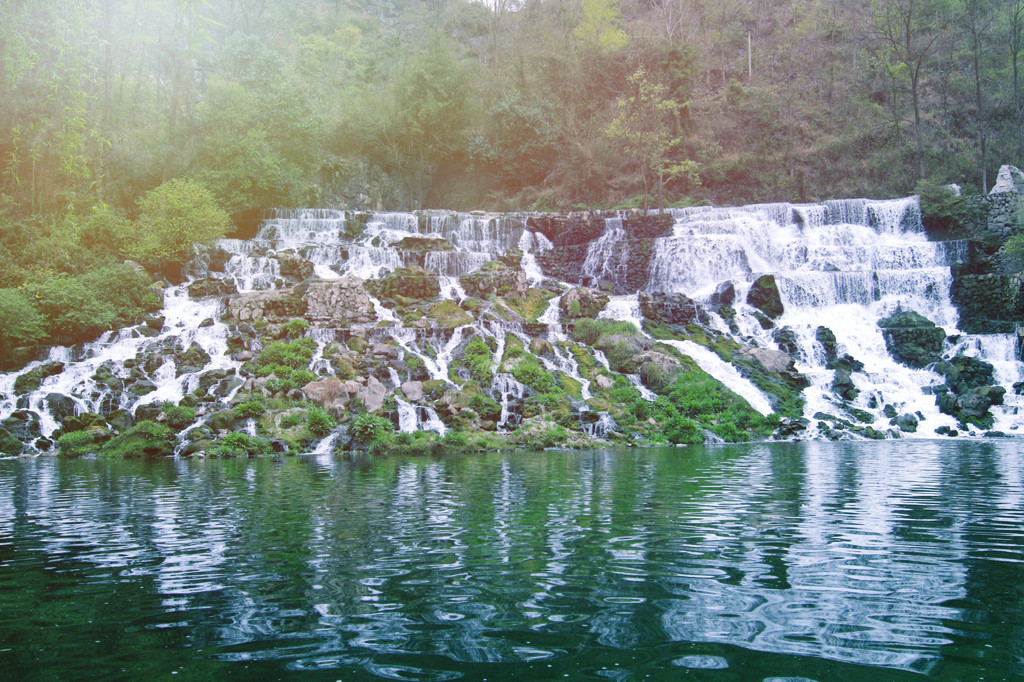
"Men worship the Buddha while women worship the Guanyin statue" is the traditional Chinese belief that our guide told us when we arrived at the largest cave temple in our country - Guanyin Cave. It's truly hard to imagine that all these halls are natural caves. There are 32 carved Buddha statues, among which the Guanyin statue is 12.6 meters tall. There is a natural-looking Guanyin-shaped stalactite on the main hall, and the natural and artificial Buddha statues are integrated together. There are many monks on famous mountains in the world, but natural cave temples are extremely rare, and this one is the largest in the country.
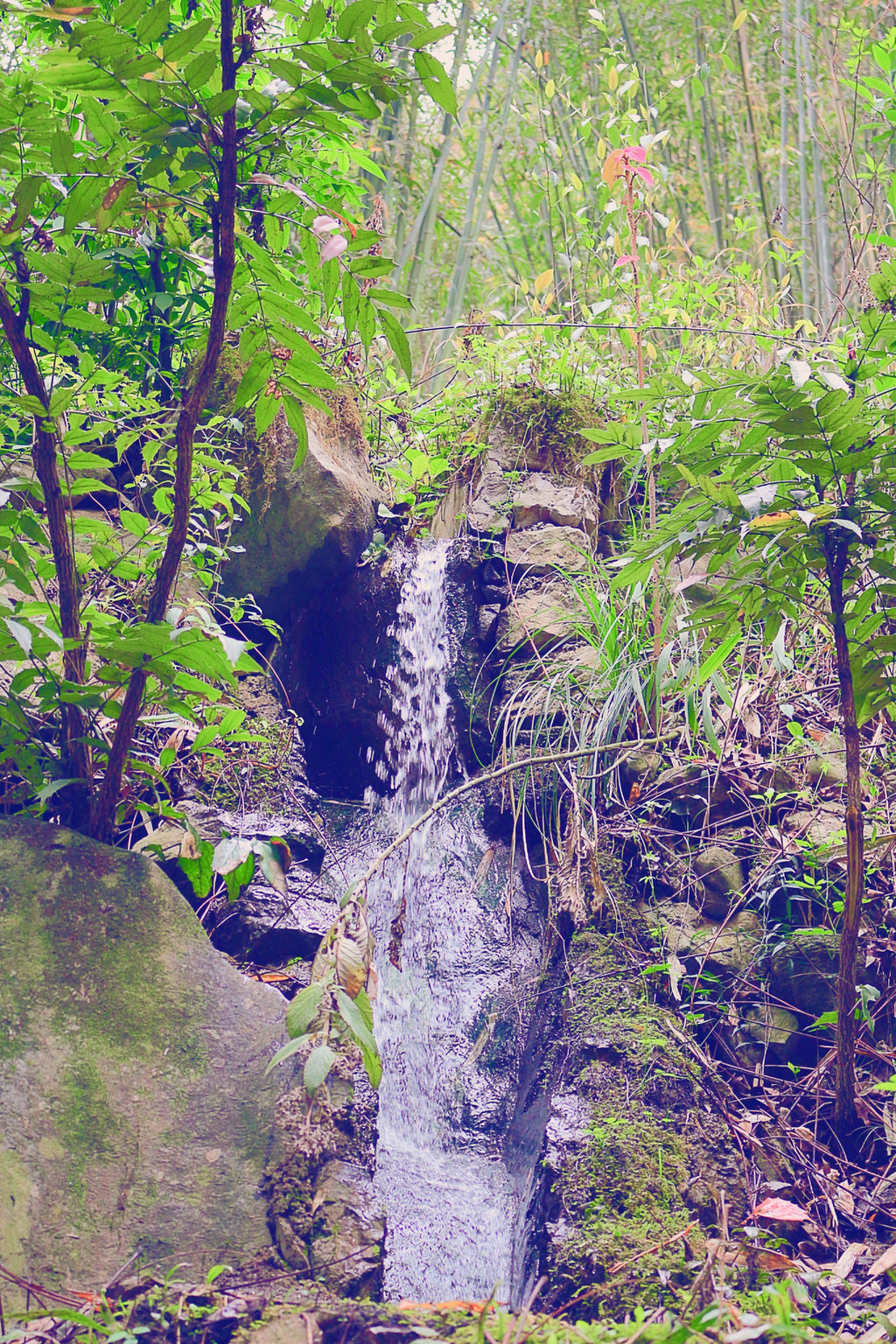
Unfortunately, March is the dry season for the Longmen Waterfall. However, one can still feel the magnificent force of the water gushing forth, like a herd of horses galloping and roaring.
Don't give up visiting the Dragon Palace in March. As the temperature rises, a 80,000-square-meter golden rape flower sea within the scenic area, with a huge cursive "dragon" formed by intercropping rape flowers and bean plants, can be clearly seen on the viewing platform. When you get close to the flower sea, you can't see the end of it. Entering the flower field and getting lost within it, the unique fragrance of the rape flowers permeates the entire air. This is definitely a paradise for portrait photography. No matter from which angle or in what posture, with the occasional addition of bees, it will always form a perfect work.
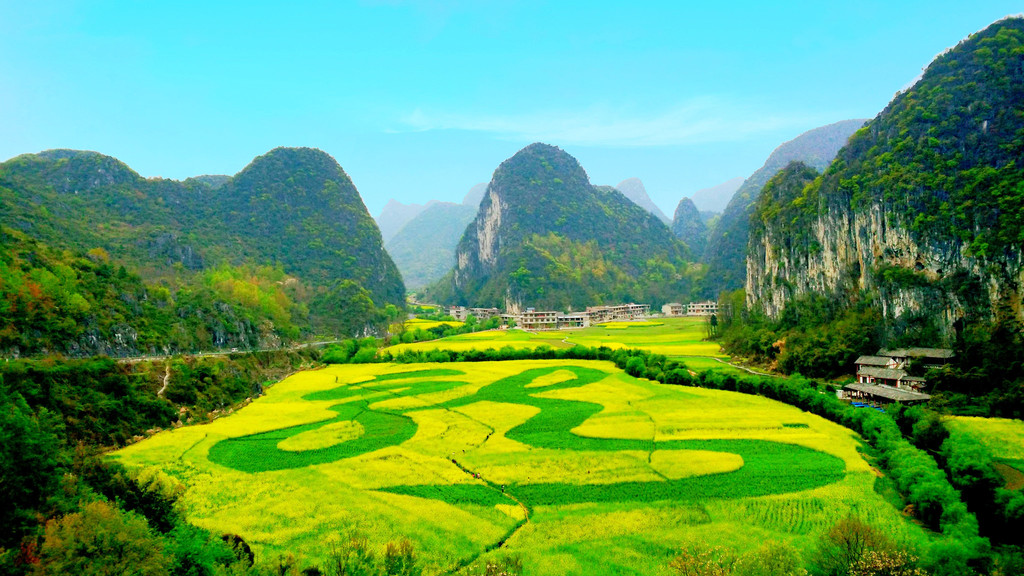
Nature is a miraculous existence. In Xuantang, the mountains do not rotate but the water does. It is a round pond, and the pool water does not rely on the force of wind. Day and night, year after year, it continuously rotates in a clockwise direction. Thinking about this as its way of life, one can feel relieved and no longer feel tired or sympathetic towards the pond. All things in the world have their predetermined fates. Nature has its own reason for existence. We should also be like the Xuantang pond, meet the people we should meet, do the things we should do, take the paths we should take, and have fewer complaints and less troubles.
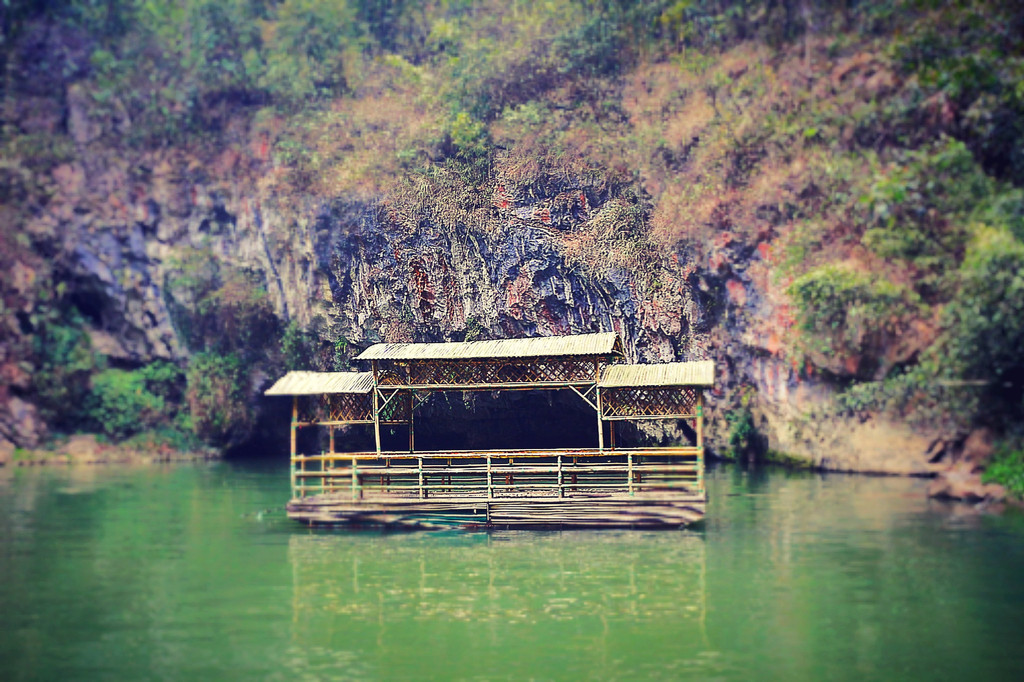
Qunfang Valley, now known as Yao Valley, is located beneath the Qunfang Valley area at the foot of Tuan Mountain, where the water flows through the three, four, and five levels of the Dragon Palace Water-Soluble Cave. On the surface, the undulating and fluctuating Qunfang Valley is filled with various natural Chinese herbal plants, with a total of over 1,200 species, such as Eucommia, Ligustrum lucidum, and Polygonum multiflorum. The "Wanjia Cave" within the valley was where some descendants of the Bai ethnic group, the得意 disciple of Mencius during the Warring States period, lived in this cave for nearly a hundred years. "The path leads to the secluded place, and the meditation room is deep among the flowers and trees." The traces of their former life are still clearly visible. At that moment, the heart seemed to stop beating... A worn-out stone mill leans against an old wooden table. Beneath them, there is a vigorous vitality of green plants. Humans have never been any different from this, thriving under the protection of nature. Even if he is in a difficult situation, suffering inevitably brings comfort. Looking at this scene, one can clearly understand the solution. When people return to their imagination, the color of the clouds naturally spreads.
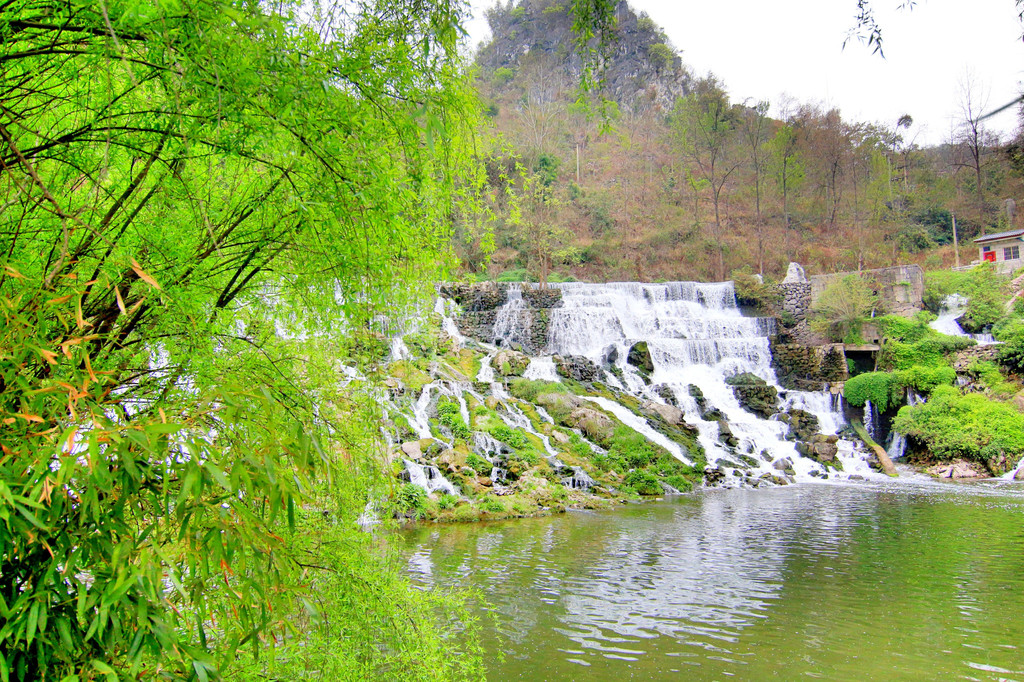
Among all the things in the world, only food cannot be neglected. The local cuisine is both rich in flavor and fresh and light. Huajiang dog meat, buckwheat cold noodles, fried eggs cakes, bobbop candies... There is always one that suits you. Perhaps the local grandma at the entrance, who bakes the local sweet potatoes on the spot in an unstandardized dialect, chats with you amiably.
The sweetness, softness and smoothness of the food are mixed with the hospitality of the locals.
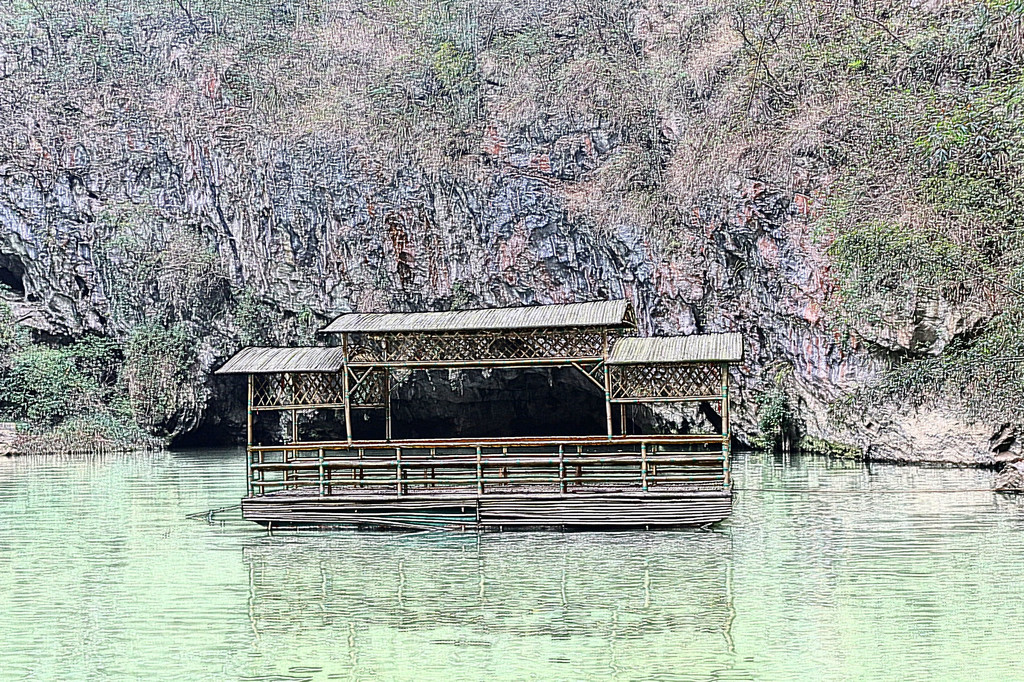
I really like one of Ellie's books, "Where There's No You, There's No Place to Go". Traveling is a form of exile, but also a search. As long as you are willing to take the first step, and then continue to take one step after another, there are no places you can reach without you. No matter how far you go, don't forget that your hometown is your foundation, the place that gave you life, raised you, and loved you.
Zhang Xiaocui, Guizhou University